The Slocan Lake Watershed is a pristine, mountainous catchment area in southeastern British Columbia characterized by deep, clean waters, rich interior rainforests, and high biodiversity.
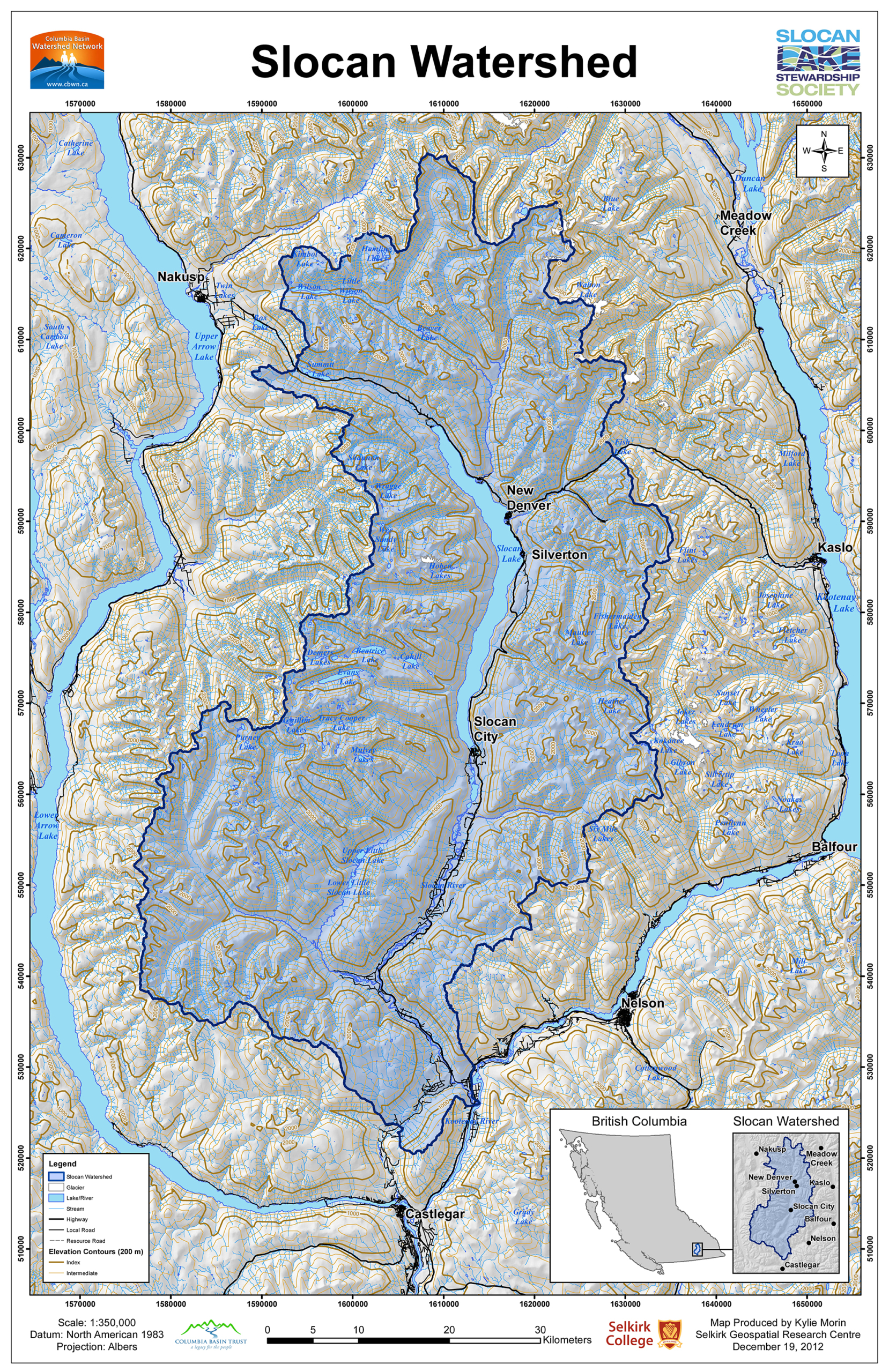
Geographic Scope: Extends from Summit Lake in the north—which empties into Slocan Lake via feeder creeks and wetlands—down to the lake’s southern outlet into the Slocan River
This documentary, produced and funded by Slocan Integral Forest Coop (SIFCo), is the first in a series celebrating the incredible conservation work happening right here in the West Kootenay
Quick facts:
- The watershed encompasses around 343,099 hectares
- The Bonanza Biodiversity Corridor, is a vital 14,000-hectare wildlife connectivity zone
- There are high concentrations of marshes, fens, and swamps that support numerous species at risk
- Slocan Lake is a deep, oligotrophic lake in the West Kootenay region of British Columbia at 298m maximum depth
- Fed primarily by snowmelt and mountain streams from the surrounding Selkirk and Purcell ranges
- The lake drains into the Slocan River, which flows south to join the Kootenay River near Castlegar
- Supports populations of bull trout, rainbow trout, kokanee, and mountain whitefish
- Just over 90% of the lake shoreline remains unaltered by human development and is recognized as the only major lake in southeastern British Columbia that remains relatively pristine, and undammed.
- Recognized as a key area for biodiversity within the West Kootenay region
Home to rare and at-risk species including the Western toad and multiple Species at Risk (SAR)
Biodiversity Corridor
Located at the north end of the Slocan Watershed, the Bonanza Biodiversity Corridor (BBC) is a largely undeveloped area of mature forests, streams, wetlands, and diverse habitats. Environment and Climate Change Canada has officially recognized it as a conservation focal area, biodiversity hotspot, and key wildlife connectivity corridor through the Kootenay Connect project.
Bonanza Creek flows through the valley bottom, supporting rainbow trout and kokanee spawning before entering Slocan Lake. The valley’s wetlands provide vital nutrients and cold water to the Upper Columbia Basin system. SLSS has completed restoration work on three wetland sections—Hunter, Upper Bonanza, and Summit Marshes—and continues site monitoring. A BBC Conservation Plan now outlines next steps for protecting the corridor’s water, forests, species, and habitats.
KCPs Bonanza ecosystem mapping, habitat assessments, and an in-depth inventory of the full range of biodiversity that occurs in the watershed
Taking Action For Species At Risk
A multi-species, habitat-based approach to provide for the needs of species at risk, and assist their recovery.
By definition, species at risk (SAR) are in danger of extirpation or of disappearing from our landscapes. Given that some plants, wildlife, fish, and other organisms in the Kootenays are facing problems caused by human activities that degrade and/or fragment habitat, conservation and compensatory actions are needed to reduce and reverse impacts to species at risk to enhance population sustainability.
